
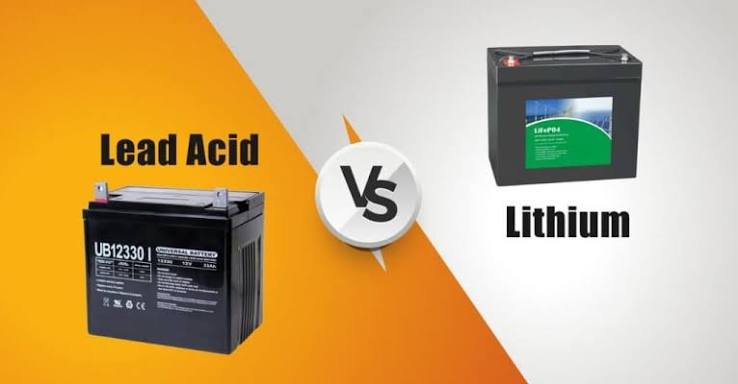
Lithium or lead-acid battery for solar in Kenya is the single biggest decision that affects both your upfront cost and how much you’ll spend on your system over the next 10 years. Lead-acid (including tubular) batteries cost less to buy today; lithium costs more upfront but usually works out cheaper over time. Here’s how to actually decide between them for your home or business.
Lithium or Lead-Acid Battery for Solar in Kenya: Quick Comparison
| Factor | Lead-Acid / Tubular | Lithium (LiFePO4) |
|---|---|---|
| Upfront cost (per kWh capacity) | Lower | Higher (typically 1.5–2.5x) |
| Typical lifespan | 3–5 years | 8–10+ years |
| Depth of discharge (usable capacity) | ~50% | ~80–90% |
| Maintenance | Requires periodic water top-ups (non-sealed types) | Virtually maintenance-free |
| Weight & size | Heavier, bulkier | Lighter, more compact |
| Charging speed | Slower | Faster |
| Performance in partial-charge cycles | Degrades faster if not fully charged regularly | Handles partial cycling well |
| Best for | Tight upfront budgets, backup-only use | Daily cycling, long-term value, minimal maintenance |
Why Lead-Acid Still Makes Sense for Some Buyers
Lead-acid and tubular batteries remain a reasonable choice if your primary goal is keeping upfront cost as low as possible, and you mainly use the battery as occasional backup during KPLC outages rather than cycling it daily. The trade-off is a shorter lifespan (typically 3–5 years before replacement) and the need for more careful maintenance, including regular water top-ups on non-sealed models.
Why Lithium Usually Wins Over a 10-Year Period
Independent battery-technology research, including analysis from organizations like the U.S. Department of Energy’s battery technology program, consistently shows lithium-based batteries deliver significantly more usable charge cycles than lead-acid alternatives before capacity degrades meaningfully. In practical terms for a Kenyan homeowner: a lithium battery bought today will likely still be your only battery in year 8, while a lead-acid system will typically need at least one full replacement in that same period — and that replacement cost needs to be added back into any “lithium is too expensive” comparison.
Lithium also allows you to use a larger share of the battery’s rated capacity (roughly 80–90%, versus ~50% for lead-acid) without shortening its lifespan, which means a lithium battery can often deliver similar real-world usable storage to a larger, more expensive lead-acid bank.
So Which Should You Choose?
Choose lead-acid/tubular if: your upfront budget is tight, you’re using solar mainly for occasional backup power rather than daily reliance, and you’re comfortable with periodic maintenance and a replacement in 3–5 years.
Choose lithium if: you’re cycling your battery daily (using solar as your primary power source, not just backup), you want to minimize maintenance, or you’re planning to keep the system for 8+ years — the higher upfront cost is usually recovered through avoided replacements and better usable capacity.
At Namurij Solar, every quote includes both options priced out side by side, so you can see the real numbers for your specific system rather than guessing.
Frequently Asked Questions
Is lithium or lead-acid better for solar in Kenya? Lithium is generally the better long-term choice for anyone cycling their battery daily, thanks to a longer lifespan (8–10+ years vs 3–5 years) and higher usable capacity. Lead-acid remains a reasonable lower-upfront-cost option for occasional backup use.
How much more expensive is lithium than lead-acid? Lithium batteries typically cost 1.5 to 2.5 times more upfront than lead-acid or tubular batteries of similar usable capacity, though the gap narrows significantly once you factor in lead-acid’s shorter lifespan and eventual replacement cost.
Do lithium batteries need maintenance? No — lithium (LiFePO4) batteries used in solar systems are effectively maintenance-free. Lead-acid and tubular batteries (unless sealed/AGM) typically require periodic water top-ups to stay healthy.
Can I upgrade from lead-acid to lithium later? In many cases, yes, provided your inverter is compatible with lithium battery communication protocols. It’s worth confirming compatibility with your installer before purchase if you think you might upgrade down the line.
Not sure which battery is right for your home or business? [Get a free consultation and side-by-side quote from Namurij Solar →] Contact us via WhatsApp at +254 731 260 944.